A practical, respectful guide to dental care, fasting, and oral health during the holy month.
Ramadan is a time of spiritual focus, discipline, and reflection. For many people in Dubai, it is also a month where daily routines change significantly. Eating patterns shift, sleep cycles adjust, and healthcare appointments are often postponed unless absolutely necessary. Dental care is one of the most common areas people hesitate about during fasting, largely due to uncertainty and fear of breaking the fast.
Patients frequently ask whether it is safe to visit the dentist during Ramadan, whether procedures like tooth extraction during Ramadan are allowed, or how to manage issues like bad breath while fasting. The truth is, many dental treatments can be safely planned during Ramadan when done with proper timing, medical understanding, and respect for fasting practices.
This guide is designed to help you make informed decisions about safe dental treatment during Ramadan, without unnecessary delays or discomfort, especially if you are living in Dubai and balancing work, fasting, and family commitments.
Why dental health should not be ignored during Ramadan
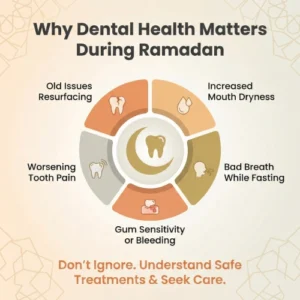
Oral health issues do not pause for Ramadan. In fact, some problems may become more noticeable during fasting due to reduced saliva flow, dehydration, and changes in eating habits.
Common concerns during Ramadan include:
- Increased mouth dryness
- Bad breath while fasting
- Gum sensitivity or bleeding
- Tooth pain that worsens at night
- Old dental issues resurfacing
Ignoring dental problems for an entire month can sometimes turn minor issues into emergencies. The key is understanding which treatments are safe, how to schedule them, and when immediate care is necessary.
Is it allowed to visit the dentist while fasting?
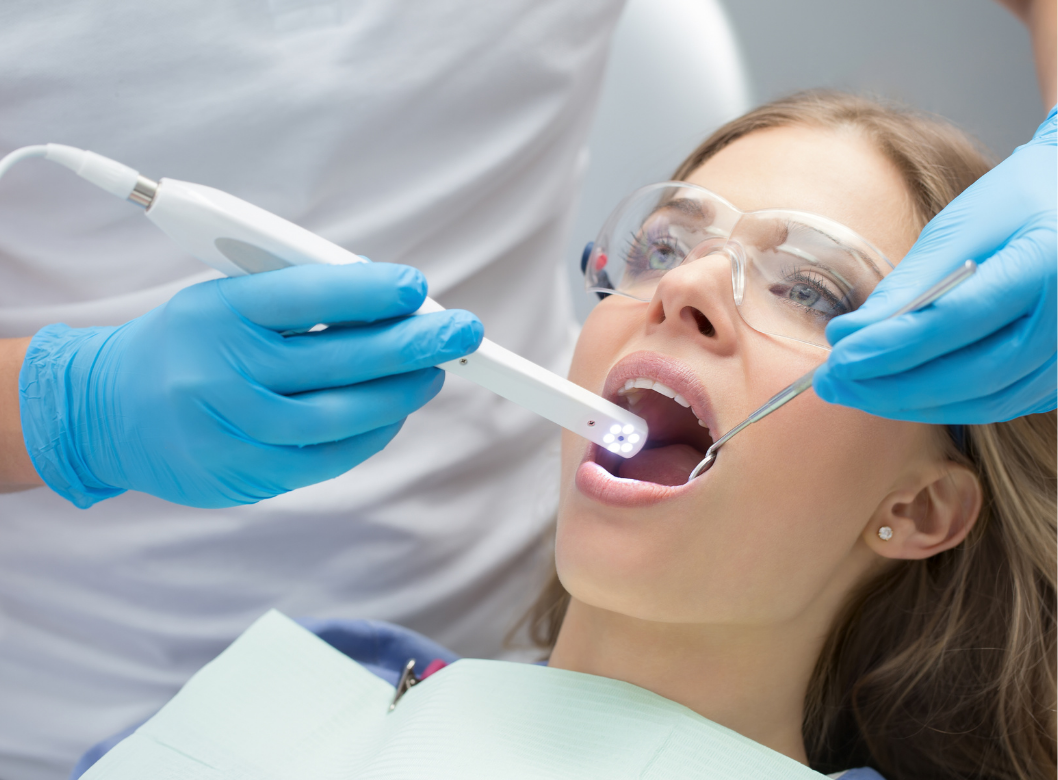
From a medical standpoint, visiting the dentist during fasting hours is generally safe. The concern usually lies in whether the treatment may invalidate the fast.
Most dental procedures do not involve swallowing substances intentionally. With proper precautions, many treatments can be performed safely without affecting fasting. Dentists in Dubai are well aware of Ramadan sensitivities and often adapt their approach during this period.
For patients who prefer complete peace of mind, treatments can also be scheduled after iftar or before suhoor.
Understanding safe dental treatments during Ramadan
Not all dental procedures are the same. Some are preventive and conservative, while others may require medication or post-procedure care. Understanding the difference helps patients plan better.
Dental treatments generally considered safe during fasting hours:
- Dental check-ups and consultations
- Scaling and polishing
- Fillings (with proper suction)
- Temporary restorations
- Dental X-rays
- Gum examinations
Dentists use high-powered suction to minimise water or saliva ingestion, making these procedures safe when done carefully.
Tooth extraction during Ramadan: what you should know
One of the most common concerns patients raise is tooth extraction during Ramadan. Tooth pain does not respect calendars, and delaying an extraction can sometimes worsen infection or swelling.
Is tooth extraction allowed while fasting?
From a medical perspective, yes, tooth extraction can be performed during fasting hours. However, there are a few important considerations:
- There may be bleeding, which should not be swallowed
- Local anaesthesia is typically used and does not break the fast
- Pain management afterwards may require medication
When is the best time to plan an extraction?
Many patients prefer to schedule extractions:
- After iftar, so they can hydrate and take medication comfortably
- Or early morning, closer to suhoor, to allow rest during the day
If the extraction is urgent due to infection or severe pain, delaying it purely due to fasting is not recommended.
Emergency dental care during Ramadan
Dental emergencies do not follow office hours. Severe tooth pain, facial swelling, abscesses, or trauma require immediate attention.
Common dental emergencies include:
- Severe toothache
- Dental abscess or swelling
- Broken or knocked-out tooth
- Uncontrolled bleeding
- Jaw pain or infection
Patients often ask about emergency dentist Ramadan timing. Many clinics in Dubai adjust schedules during Ramadan, offering extended evening hours to accommodate fasting patients.
If you experience intense pain or swelling, it is important to seek treatment immediately, regardless of fasting. Health should always be prioritised.
Managing bad breath while fasting
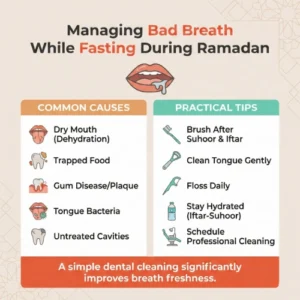
Bad breath treatment while fasting is one of the most common dental concerns during Ramadan. Fasting reduces saliva production, which normally helps cleanse the mouth and control bacteria.
Common causes of bad breath during Ramadan:
- Dry mouth due to dehydration
- Food particles trapped between teeth
- Gum disease or plaque buildup
- Tongue bacteria
- Untreated cavities
Practical tips to manage bad breath:
- Brush thoroughly after suhoor and iftar
- Clean the tongue gently
- Floss daily to remove trapped food
- Stay hydrated between iftar and suhoor
- Schedule professional cleaning before or during Ramadan
A simple dental cleaning can significantly improve breath freshness throughout the fasting day.
Dental cleanings and scaling during Ramadan
Scaling and polishing are among the most commonly postponed dental treatments during Ramadan, often unnecessarily.
When performed correctly with proper suction, dental cleaning does not break the fast. It helps:
- Reduce plaque and bacteria
- Improve gum health
- Minimise bad breath
- Prevent gum bleeding
Many dentists recommend scheduling scaling sessions either early morning or after iftar for patient comfort, but medically, it remains safe during the day.
Fillings and minor restorative treatments
Dental fillings are another treatment patients often delay due to fasting concerns. In reality, fillings can be safely performed during Ramadan when proper suction is used.
Delaying a small cavity can allow it to grow deeper, eventually leading to nerve involvement or infection. Addressing it early avoids more complex procedures later.
Root canal treatment during Ramadan
Root canal treatment often raises questions because it may involve multiple appointments.
The procedure itself does not require swallowing substances. Local anaesthesia is used, which is generally considered acceptable. However, post-procedure pain medication may be needed.
Many patients choose to schedule root canal appointments after iftar for convenience, especially if they anticipate discomfort afterwards.
Managing dental pain while fasting
Dental pain during fasting hours can be particularly uncomfortable. Here are safe strategies:
- Avoid chewing on the painful side
- Rinse the mouth gently without swallowing
- Apply a cold compress externally
- Schedule prompt dental evaluation
Painkillers should only be taken after iftar unless advised otherwise by a doctor.
Importance of timing dental appointments during Ramadan
While many treatments are safe during fasting hours, timing can improve comfort and recovery.
Ideal appointment timings:
- After iftar: allows hydration and medication
- Early morning: followed by rest
- Avoid midday appointments for lengthy procedures
Most clinics in Dubai adjust their schedules during Ramadan to accommodate these preferences.
Dental hygiene routine during Ramadan
Maintaining oral hygiene becomes even more important during fasting.
Recommended routine:
- Brush twice daily using fluoride toothpaste
- Floss once daily
- Clean the tongue
- Use alcohol-free mouthwash after iftar
- Replace toothbrush regularly
Good home care reduces the need for urgent dental visits during the month.
Common myths about dental care during Ramadan
“All dental treatments break the fast”
This is not true. Many treatments are safe when done correctly.
“Bleeding automatically invalidates fasting”
Accidental bleeding does not invalidate fasting as long as it is not swallowed intentionally.
“Dental care can wait until Ramadan ends”
Delaying treatment can worsen problems and lead to emergencies.
Planning dental treatments before Ramadan
For patients who prefer minimal appointments during fasting, planning ahead helps.
Before Ramadan, consider:
- Dental check-ups
- Scaling and polishing
- Addressing cavities
- Evaluating wisdom teeth
- Treating gum issues
This reduces the likelihood of unexpected pain during the month.
Choosing the right clinic during Ramadan
Not all clinics operate the same way during Ramadan. It is important to choose a clinic that:
- Understands fasting sensitivities
- Offers flexible Ramadan timings
- Prioritises patient comfort
- Provides emergency care when needed
A patient-first approach ensures safe and respectful care.
Final thoughts
Dental care during Ramadan does not need to be stressful or confusing. With proper planning, awareness, and professional guidance, most safe dental treatments during Ramadan can be carried out comfortably without affecting fasting. At SwissMed Clinic, patients are supported with flexible Ramadan timings and thoughtful, expert-led dental care.
To book an appointment or seek urgent advice, contact 045726384 or visit the clinic at R01, Ground Floor, Palm View 1, Dubai Media City, and take care of your oral health with confidence during the holy month.