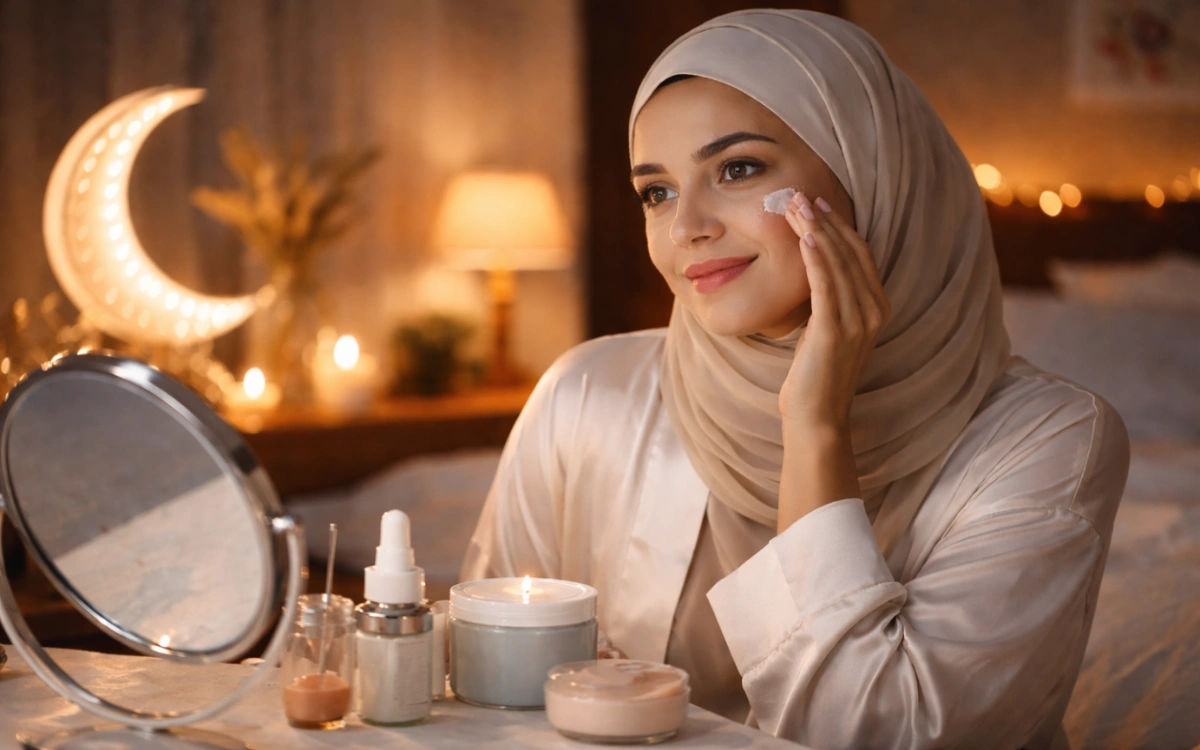
A thoughtful, dermatologist-approved guide to healthy skin during Ramadan
Ramadan brings a beautiful shift in rhythm. The days become quieter, the nights longer, and routines change almost overnight. While the focus is rightly on spiritual wellbeing, many people begin to notice subtle changes in their skin as the month progresses. Dryness, dullness, breakouts, and tired-looking skin are common complaints, even among those who usually have a stable skincare routine.
These changes are not a sign that your skin is “failing.” They are simply a response to fasting, altered sleep cycles, dehydration, and late nights. With the right skincare routine for Ramadan fasting, your skin can stay balanced, clear, and healthy throughout the month.
This guide is written to help you understand what your skin goes through during Ramadan, how to make smart, realistic adjustments, and when professional care may be helpful, especially if you are looking for a safe and effective dull skin treatment in Dubai.
Why skin behaves differently during Ramadan
During Ramadan, the body adapts to a new pattern of nourishment and rest. These changes directly affect the skin, which is often the first place where internal imbalances show up.
Common factors affecting skin during Ramadan include:
- Reduced water intake during the day
- Long gaps between meals
- Late nights and disrupted sleep cycles
- Increased caffeine or fried food intake at iftar
- Dehydration caused by fasting and air conditioning
Together, these factors can weaken the skin barrier, slow down repair, and increase inflammation.
Understanding what fasting does to your skin
Fasting itself is not harmful to the skin. In fact, it can have positive effects when supported properly. However, without the right care, fasting may lead to:
- Dry, tight skin due to dehydration
- Reduced natural oil production
- Slower skin cell turnover
- Increased sensitivity
- Acne flare-ups in some people
This is why adjusting your skincare routine is essential, rather than continuing with the same products and habits.
Building the right skincare routine for Ramadan fasting
Your skincare routine during Ramadan should focus on three key goals:
- Preserving hydration
- Protecting the skin barrier
- Preventing congestion and breakouts
Simplicity and consistency matter more than layering too many products.
Morning skincare routine during Ramadan
Mornings during Ramadan often follow suhoor or limited sleep. The skin may already feel dry or dull at this time.
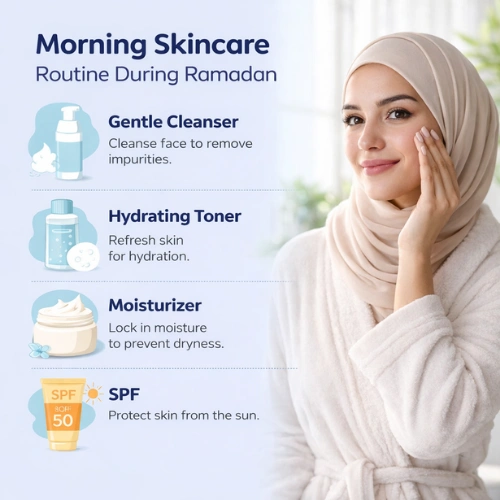
Step 1: Gentle cleansing
Avoid harsh foaming cleansers that strip the skin. Use a mild, non-drying cleanser to remove overnight oil and sweat.
Over-cleansing can worsen dryness and trigger breakouts later in the day.
Step 2: Hydration-focused serum
Lightweight hydrating serums with ingredients like hyaluronic acid help retain moisture without feeling heavy.
This step is especially important if you are fasting for long hours.
Step 3: Moisturiser
Choosing the best moisturiser for dry skin during Ramadan is crucial. Look for formulations that support the skin barrier rather than just adding surface hydration.
Ingredients to look for:
- Ceramides
- Glycerin
- Squalane
- Panthenol
Avoid fragranced or alcohol-heavy products.
Step 4: Sunscreen
Even during fasting, sun protection is essential. UV exposure worsens dehydration, pigmentation, and dullness.
Use a broad-spectrum sunscreen suitable for your skin type.
Night-time skincare routine after iftar
Night-time is when the skin repairs itself, especially during Ramadan when nights are longer.
Step 1: Proper cleansing
After a long day, the skin accumulates sunscreen, pollution, and oil. A gentle but effective cleanse is necessary.
If you wear makeup, consider double cleansing using a mild oil or micellar water followed by a gentle cleanser.
Step 2: Treatment products
This is the best time to use active ingredients, as the skin has time to recover overnight.
Depending on your skin needs:
- Niacinamide helps regulate oil and strengthen the barrier
- Gentle exfoliating acids (used sparingly) help reduce dullness
- Retinoids may be continued if your skin tolerates them well
Avoid introducing new activities during Ramadan.
Step 3: Nourishing moisturiser
Night creams or richer moisturisers help replenish moisture lost during the fasting day.
This step supports a dry skin cure during Ramadan when used consistently.
Dry skin cure during Ramadan: what really works
Dry skin during Ramadan is one of the most common concerns. It often shows up as:
- Tightness
- Flaking
- Dull appearance
- Fine lines becoming more visible
Practical tips to manage dry skin:
- Increase water intake between iftar and suhoor
- Limit caffeine, which increases dehydration
- Use a humidifier indoors if possible
- Avoid long, hot showers
- Apply moisturiser on damp skin
Skincare alone cannot fix dehydration if internal hydration is neglected.
How to prevent acne while fasting
Interestingly, some people experience more breakouts during Ramadan, while others notice improvement. Acne during fasting is usually linked to:
- Hormonal changes
- Increased consumption of fried or sugary foods
- Poor sleep quality
- Dehydrated skin producing excess oil
How to prevent acne while fasting:
- Stick to gentle cleansers
- Avoid over-exfoliating
- Choose non-comedogenic moisturisers
- Maintain a consistent routine
- Be mindful of diet choices at iftar
Acne-prone skin still needs moisturisation. Skipping moisturiser often worsens breakouts.
Diet choices that affect skin during Ramadan
What you eat during iftar and suhoor directly affects your skin.
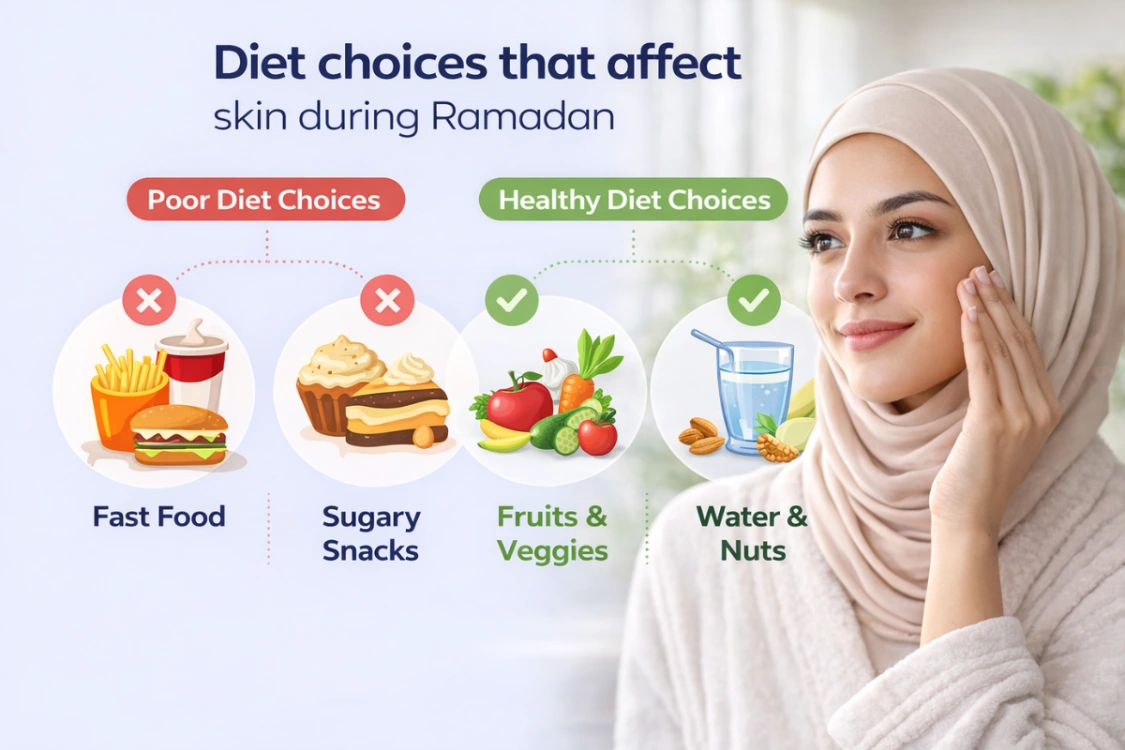
Skin-friendly choices:
- Fruits with high water content
- Vegetables rich in antioxidants
- Healthy fats like nuts and olive oil
- Lean protein
Foods to limit:
- Excess sugar
- Fried foods
- Processed snacks
- Too much caffeine
Balanced nutrition supports skin repair and reduces inflammation.
Late nights and their impact on skin
Late nights during Ramadan are common, but lack of sleep affects skin significantly.
Poor sleep can lead to:
- Dull skin
- Dark circles
- Increased breakouts
- Slower healing
Try to:
- Get short naps during the day if possible
- Maintain a consistent sleep schedule
- Avoid heavy skincare layers that may clog pores overnight
Skin repairs itself during sleep, so rest is an essential part of your routine.
Managing dull skin during Ramadan
Dullness is often the result of dehydration, dead skin buildup, and slower circulation.
To address dullness:
- Use gentle exfoliation once or twice a week
- Focus on hydration
- Avoid harsh scrubs
- Consider professional treatments if needed
A well-planned dull skin treatment in Dubai can safely restore glow without stressing the skin.
Professional skin treatments during Ramadan
Many patients hesitate to undergo skin treatments during Ramadan, but several options are safe and effective.
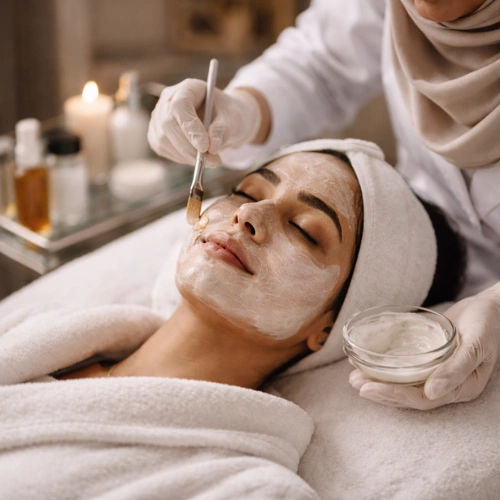
Commonly recommended treatments include:
- Hydrating facials
- Gentle deep cleansing treatments
- Skin barrier repair therapies
These treatments help reset the skin without causing irritation or downtime.
When to consider seeing a dermatologist
If you notice:
- Persistent dryness despite moisturising
- Acne worsening significantly
- Skin sensitivity or burning
- Sudden pigmentation changes
A professional assessment helps prevent long-term skin issues.
Skincare mistakes to avoid during Ramadan
Common mistakes include:
- Over-washing the face
- Skipping moisturiser
- Trying new products impulsively
- Using harsh exfoliants
- Ignoring sunscreen
Keeping skincare simple and consistent is the safest approach.
Adjusting skincare after Ramadan
Once Ramadan ends, your skin may need a gentle transition back to your usual routine.
Avoid sudden changes. Gradually reintroduce actives and adjust hydration based on your skin’s response.
Final thoughts
Ramadan is a time of balance, and your skin deserves the same thoughtful care. With the right skincare routine for Ramadan fasting, mindful hydration, and consistent habits, it is possible to maintain healthy, clear, and radiant skin throughout the month. For personalised care and professional dull skin treatment in Dubai, consult SwissMed Clinic, located at R01, Ground Floor, Palm View 1, Dubai Media City. To book an appointment, contact 045726384 and give your skin the expert attention it needs during Ramadan.